

James Donner
3 March 2017
Cloud Chatter: February 2017
Our February edition is packed with great content! We kick off with explaining why software-defined everything matters and give you a recap of Mobile World Congress. Download our latest whitepaper on containers, or join our upcoming webinars on OpenStack, Containers and MAAS. We’ve also included a fantastic host of tutorials for getting started with LXD machine containers. As always we conclude with a roundup of industry news.
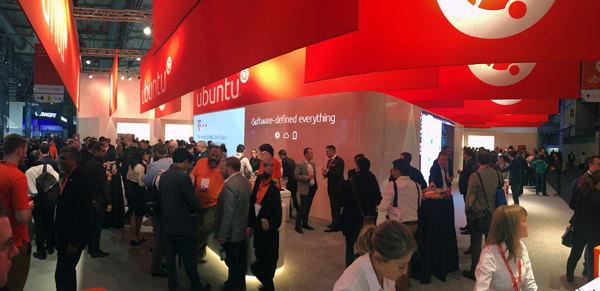
Why does software-defined everything matter?
This week at Mobile World Congress (MWC), the world’s largest annual gathering for the mobile and telco industry in Barcelona, the Ubuntu booth told the story of how we are at the very center of the world’s software-defined future.
‘Software-defined everything’ represents a step change in the telco industry in particular. The entire industry is moving away from a mode of organising and thinking about their network and services as appliances with fixed functions to stacks of interacting software. Learn more
Read our recaps for days 1, 2, 3, and 4
Whitepaper: For CTOs: the no-nonsense way to accelerate your business with containers
Our latest whitepaper outlines how containers offer a smaller memory footprint and better efficiency – simply put, you can get more for the same hardware. Download this whitepaper to learn why containers present a new opportunity for the CTO to reduce cost, to increase agility, and to move to a more scalable and resilient architecture.

Webinar: Get cloud-ready servers in minutes with MAAS
Join us for our live webinar on Thursday, 15th March to learn how leading companies are using MAAS to improve the efficiency of their hybrid cloud deployments. We’ll show you how to deploy a cloud-ready data centre quickly and efficiently and cover MAAS capabilities, and best practices for server provisioning.
Join our OpenStack and Containers Office Hours
We’ve kicked off a series of ‘Office Hours’ online sessions to help community members and customers deploy, manage and scale their Ubuntu-based cloud infrastructure. These interactive sessions, hosted by a senior engineer from our cloud architecture team, will cover a range of topics around OpenStack and containers.
In other news
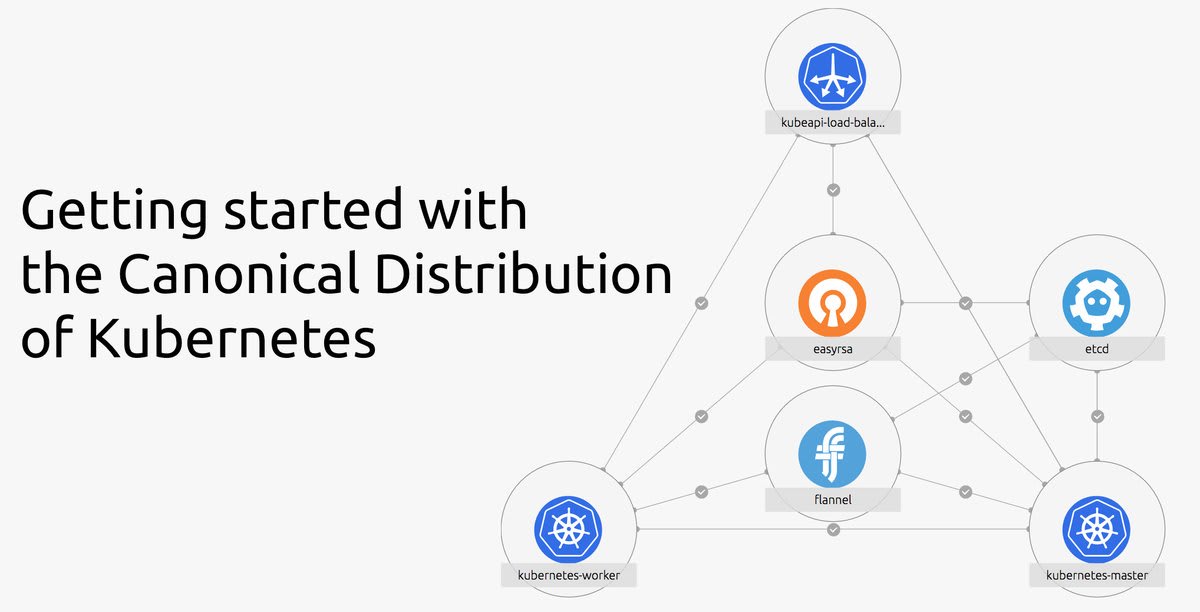
On-demand webinar: Getting started with the Canonical Distribution of Kubernetes
Watch our latest on-demand webinar to learn how to set up your own Kubernetes cluster on private/public clouds, as well as bare metal. We’ll cover initial configuration, installation, and validation. We’ll also show you how to horizontally scale your cluster for future growth. Watch now
LXD containers – a host of tutorials to get you started
LXD machine containers are a Canonical-initiated project which takes the speed and latency of containers and brings them to the hypervisor world. LXD gives you full ‘machine’ functionality but operating at container speeds. We’ve curated a selection of tutorials for getting started with LXD containers.
- The LXD 2.0 Story (12-part blog series)
- Network management with LXD (2.3+)
- LXD on Debian using snapd
- Running Kubernetes inside LXD
- Ubuntu Core in LXD Containers
- LXD client on Windows and MacOS
- Automatically import your public SSH keys into LXD instances
Top posts from Insights
- [Tutorial] Automate the deployment of Kubernetes in an existing AWS infrastructure
- [eBook] What IT Pros need to know about server provisioning
- [Tutorial] GPUs and Kubernetes for Deep Learning — Part ⅓
- [Blog] Snapcraft 2.27 has been released
- [Blog] The questions you’re afraid to ask about containers
Ubuntu Cloud in the news
OpenStack, SDN & NFV
- Kontron, Canonical Team on Integrated OpenStack Platform
- OpenStack as part of the telecom virtualization journey – NFV/SDN
- OpenStack—Preferred Platform for NFV—is Everywhere at Mobile World Congress
Containers & Storage
- Why your traditional virtualization vendor can’t help you with containers
- Containers Are The New App Servers


